15 Types of Stickers: Popular Styles & Their Best Uses
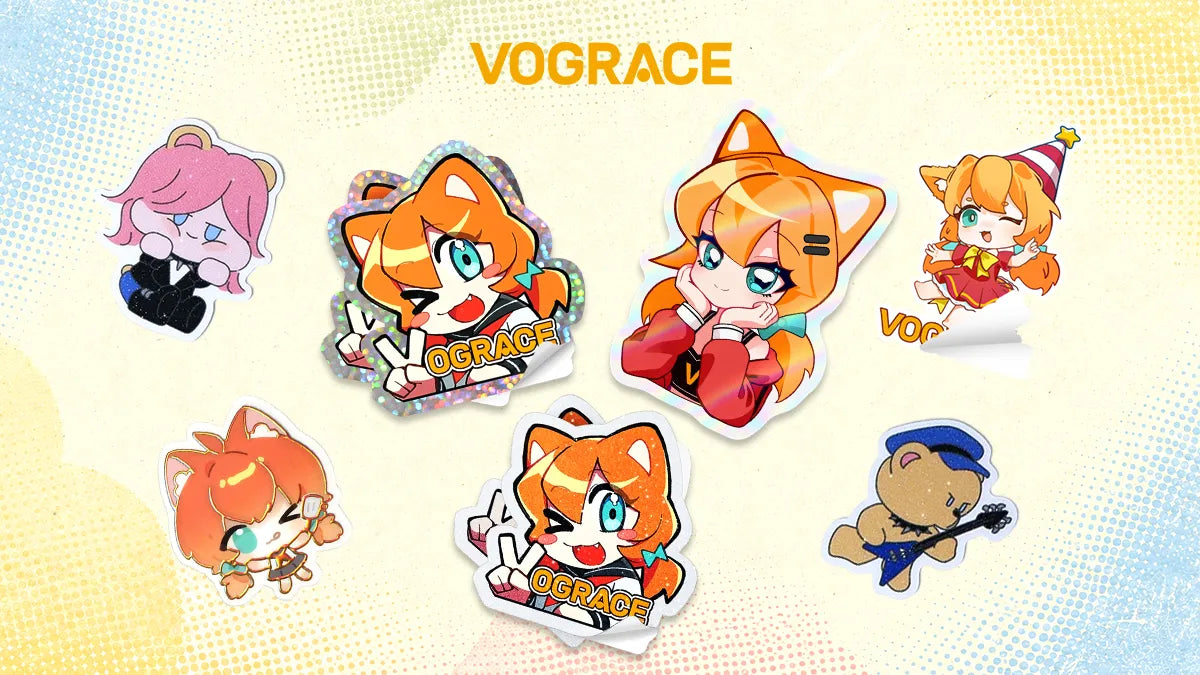
The sticker sealing a bakery bag has a different job from the one on a rain-soaked water bottle. One may need to look good for a day; the other has to withstand repeated handling and moisture. And that is before you get into holographic finishes, custom shapes, or entire sheets of tiny illustrations.
There are plenty of sticker types to choose from, but the names are easier to understand once you separate material, finish, and format. A single sticker can be vinyl, holographic, and die-cut at the same time. Below are 15 popular styles, what makes each useful, and where they work best.
15 Popular Types of Stickers at a Glance
Use this chart as a quick reference. These are familiar shopping and printing terms—not 15 mutually exclusive materials. Exact durability, adhesive strength, and print options depend on the product.
|
Sticker type |
What stands out |
Best uses |
Keep in mind |
|
1. Paper |
Paper-based face material |
Planners, dry packaging, labels |
Not ideal for moisture |
|
2. Vinyl |
Flexible plastic film |
Laptops, bottles, everyday decals |
Check water/UV rating |
|
3. Clear |
Transparent film background |
Glass, jars, minimal labels |
Needs good color contrast |
|
4. Holographic |
Shifting rainbow reflections |
Collectibles, decorative merch |
Shine may compete with detail |
|
5. Glitter |
Sparkling surface effect |
Crafts, gifts, statement artwork |
Fine text can be less legible |
|
6. Matte |
Low-glare surface |
Illustrations, journals, packaging |
Not automatically writable |
|
7. Glossy |
Smooth, reflective sheen |
Colorful art, logos, decoration |
Can show glare and scuffs |
|
8. Foil & metallic |
Gold, silver, or metallic shine |
Seals, invitations, accent designs |
Best with clear, simple details |
|
9. 3D puffy |
Raised, dimensional texture |
Character art, novelty stickers |
Bulkier than flat stickers |
|
10. Glow-in-the-dark |
Glow after light exposure |
Room decor, novelty designs |
Glow fades; must recharge |
|
11. Die-cut |
Sticker and liner cut to shape |
Individual merch, giveaways |
Shape does not determine durability |
|
12. Kiss-cut |
Face cut; liner stays intact |
Detailed shapes, easy peeling |
Extra liner surrounds design |
|
13. Sticker sheets |
Several designs on one sheet |
Journals, collections, sticker sets |
Check sheet size and spacing |
|
14. Roll |
Labels on continuous liner |
Packaging runs, repeated labels |
Less handy for mixed one-offs |
|
15. Transfer |
Artwork applied via carrier |
Lettering, logos, smooth surfaces |
Application technique varies |
Types of Stickers by Material
The base material matters most when you need to know whether a sticker can handle water, rubbing, or regular use. Transparent stickers are included here because shoppers often treat them as a separate type, even though “clear” describes the appearance of a film rather than a distinct material family.
1. Paper Stickers
Paper stickers are a familiar option for address labels, journals, gift wrapping, and small product packages. They are often economical for dry, indoor use, and uncoated paper versions can be easy to write on. The feel can range from smooth to textured, with matte or glossy coatings available.
Their weakness is moisture: standard paper stickers may wrinkle, tear, or lose print quality when wet. A protective coating can improve performance, but it does not make every paper sticker waterproof.
Best for: planners, envelopes, gift seals, and packaging that stays dry.
2. Vinyl Stickers

Vinyl stickers use a flexible plastic film rather than paper, making them a common choice for laptop lids, tumblers, and frequently handled accessories. They generally resist tearing and moisture better than uncoated paper. Some vinyl products are also made for outdoor use, with protective finishes that help reduce fading and scratches.
Still, “vinyl” is not a blanket promise of weatherproofing. Print ink, lamination, adhesive, and exposure conditions all matter. For a bottle that gets washed regularly or a sticker placed outdoors, check the maker’s specific care and durability guidance.
Best for: everyday decals and durable decorative stickers.
3. Clear Stickers

Clear stickers are printed on transparent film, leaving the surface beneath visible. That makes them especially useful on glass jars, windows, clear cases, and packaging where a solid white background would look out of place.
Think about contrast before printing. Transparent areas will show the color of the object underneath, and pale artwork may nearly disappear on a dark surface. White ink or a white backing layer can help selected parts stand out when the printer offers it. Apply clear stickers to a clean, smooth surface, since bubbles and dust tend to be easier to spot.
Best for: glass, neat product labels, and minimal designs.
Sticker Types by Finish and Special Effects
A finish changes the way printed artwork catches light, and sometimes how it feels. Most of these effects can be combined with different materials or cut styles, so choose the look after considering where the sticker will go.
4. Holographic Stickers

Holographic stickers have a film that reflects shifting, rainbow-like colors as the viewing angle changes. It adds movement to simple lettering, stars, fantasy art, or small collectible designs without changing the printed illustration itself.
The effect can be lively, but it may compete with very fine lines or subtle colors. Use strong outlines and sufficient contrast if legibility matters. Vograce’s holographic stickers illustrate how the same artwork can take on a more reflective finish.
Best for: collectible art, fan merchandise, and playful packaging accents.
5. Glitter Stickers

Glitter stickers add a fine sparkling effect rather than the color-shifting shine of holographic film. The sparkle is especially noticeable on decorative motifs, character accessories, stars, and celebratory designs.
They can add visual texture to an otherwise flat image, but too much sparkle can make tiny lettering harder to read. Review a sample or close-up photo when a particular glitter density matters.
Best for: stationery, party favors, gift decoration, and expressive illustrations.
6. Matte Stickers
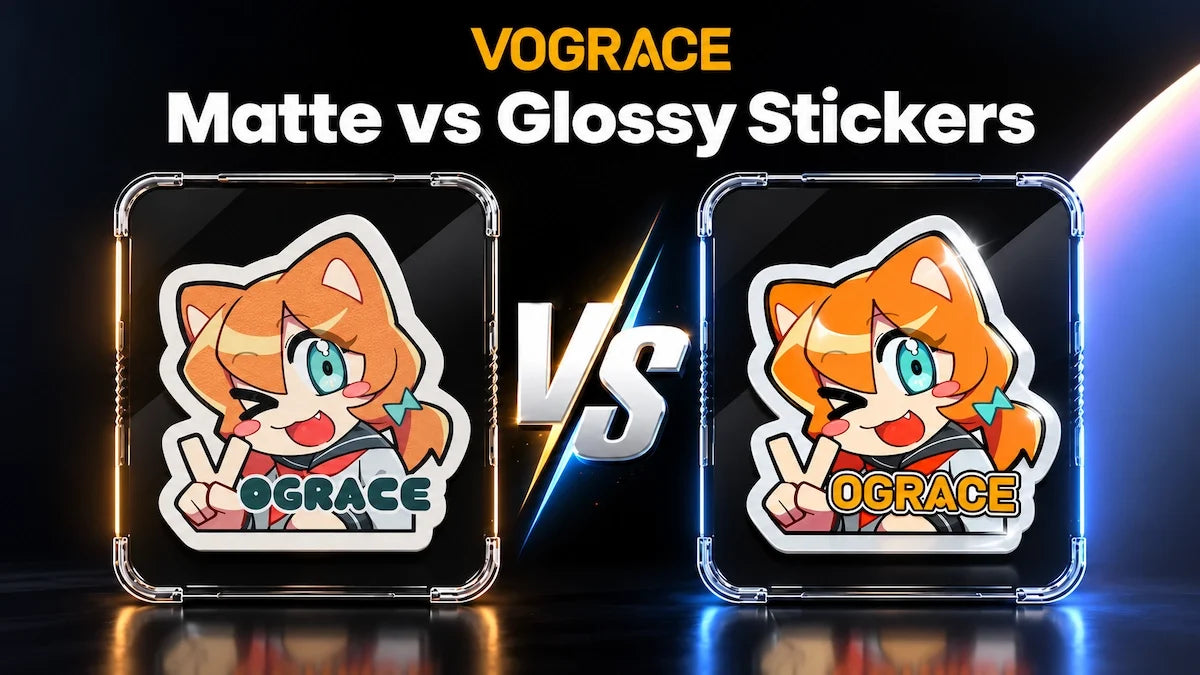
Matte stickers have little surface shine, so illustrations can appear softer and easier to view under bright light. They work well for watercolor-inspired art, muted palettes, handwritten-looking labels, and designs where texture matters more than sparkle.
Matte describes the finish, not the base material: you can find matte paper and matte film stickers. Also, not every matte surface accepts ordinary pen ink. If you plan to write on your stickers, look for a product specifically described as writable.
Best for: journals, art prints in sticker form, and clean packaging.
7. Glossy Stickers
Glossy stickers have a bright, reflective surface that can make saturated colors and bold graphics feel more vivid. They are a familiar choice for cute characters, colorful logos, product inserts, and casual decoration.
The trade-off is glare. Under direct light, reflections can briefly hide small text; scratches may also be more noticeable on some finishes. Gloss does not necessarily mean a sticker is waterproof—it is the full material and coating system that determines performance.
Best for: vibrant artwork, promotional designs, and eye-catching labels.
8. Foil and Metallic Stickers

Foil and metallic stickers create a reflective gold, silver, or other metal-like effect. Depending on the printing process, the shine may come from a metallic face material or foil applied to selected parts of a design. These are related looks, but not identical production methods.
A little metallic shine can do more than covering the entire sticker with it. Try it on a logo, border, emblem, or a few stars in an illustration. Keep fine text high contrast against reflective areas.
Best for: gift seals, invitations, stationery details, and premium-feeling packaging.
9. 3D Puffy Stickers

Puffy stickers rise above the backing instead of lying completely flat. Their raised shape adds a tactile, toy-like quality that suits cartoon characters, small icons, and playful collections. Some are soft or cushioned; the exact feel depends on how they are manufactured.
Because they have extra thickness, they may catch on edges or feel awkward on surfaces that get rubbed constantly. They are better on notebooks, decorative cases, or display areas than on objects needing a perfectly smooth label. Vograce also makes custom 3D puffy stickers.
Best for: cute stationery, novelty gifts, and tactile character art.
10. Glow-in-the-Dark Stickers

Glow-in-the-dark stickers use a light-storing material or pigment. After exposure to a suitable light source, they give off a visible glow in darkness. The glow gradually becomes dimmer and can be refreshed with more light exposure.
They are fun for bedroom decorations, seasonal crafts, and themed sticker collections. Do not confuse them with reflective stickers, which bounce back incoming light, or fluorescent stickers, which simply appear vivid under illumination. Novelty glow stickers should not be treated as certified emergency signage.
Best for: decor, party themes, and night-sky designs.
Sticker Types by Cut and Format
Two stickers can be made from identical vinyl and still be sold quite differently. This section is about how each sticker is cut, arranged on its liner, or transferred onto a surface—not what the sticker is made of.
11. Die-Cut Stickers

A die-cut sticker is cut around its shape, with the backing trimmed to the same outer outline. A cat illustration might arrive as a cat-shaped sticker instead of a square or circle. This format makes a single design feel finished before anyone peels it.
Die-cut stickers are easy to pack as individual items, include with orders, or hand out at an event. The cut alone does not make the sticker more durable; that depends on its material and finish.
Best for: individual art stickers, artist merchandise, and branded giveaways.
12. Kiss-Cut Stickers

With a kiss cut, the cutting blade goes through the printable sticker layer but not through the backing liner. The design peels away while extra backing remains around it. This makes delicate shapes easier to handle and can leave room for presentation or instructions on the surrounding liner.
Kiss cutting is also the technique commonly used to put several separate stickers onto one sheet. For example, Vograce’s kiss-cut sticker sheets let different illustrations share a backing.
Best for: intricate contours, easy-peel individual stickers, and grouped designs.
13. Sticker Sheets
A sticker sheet holds several peel-off designs on one backing page. It might be filled with small icons for a planner, a coordinated character set, or repeated logos. Instead of buying one sticker at a time, you keep an entire collection together.
For custom artwork, check the sheet dimensions, gap between cut lines, and minimum readable text size before submitting the layout. Sticker sheets describe the format; the individual designs are usually kiss-cut and may use paper, vinyl, or specialty films.
Best for: journaling, decorative sets, collections, and gifts.
14. Roll Stickers
Roll stickers are arranged one after another on a continuous backing liner, often with the same label repeated. They are convenient when you need to apply stickers quickly to many boxes, bottles, bags, or parcels. Depending on the product, rolls may be suitable for hand application or dispensers.
They are less practical if every sticker is a different piece of artwork or if you only need a handful. When ordering rolls for a machine, check label orientation, core size, and spacing rather than assuming all rolls work with every dispenser.
Best for: repeated product labels, packaging, and larger-volume use.
15. Transfer Stickers

Transfer stickers are designed to place a graphic onto a surface using a carrier or application layer. Instead of leaving a large visible backing border, the process can position separate letters or detailed design elements together. Cut-vinyl lettering and certain printed transfer methods use different constructions, so application instructions are not interchangeable.
These stickers can create a neat look on glass, laptops, or smooth display surfaces, but they demand a little more care when positioning and peeling the carrier. Always follow the instructions for the specific product.
Best for: lettering, logos, and clean graphics on smooth surfaces.
How to Choose the Right Sticker Type for Your Needs
Start with where the sticker will live. The prettiest finish is not much use if the adhesive fails on the intended surface, and the toughest material may be unnecessary for a dry notebook page.
|
Where you will use it |
Good starting options |
Why they fit |
|
Journals and planners |
Paper, matte, or kiss-cut sheets |
Easy organization and low-glare designs; choose writable stock if needed. |
|
Laptop covers and cases |
Vinyl die-cuts; matte or holographic finishes |
Flexible decorative film; check removability if you may switch designs. |
|
Water bottles and tumblers |
Water-resistant vinyl with suitable print protection |
Frequent handling and washing call for product-specific care guidance. |
|
Product packaging |
Paper, clear, foil, or roll labels |
Choose by surface, brand look, and number of labels to apply. |
|
Art and collectible stickers |
Die-cut, holographic, glitter, or puffy |
Presentation and character detail often matter more than heavy-duty use. |
|
Event giveaways |
Individual die-cuts or compact sticker sheets |
Easy to share; pick a format that suits the handout. |
|
Glass jars and windows |
Clear or transfer stickers |
Test contrast, placement, and the adhesive on glass. |
|
Outdoor equipment |
Outdoor-rated, protected vinyl |
Look for explicit water, UV, and weather specifications. |
Before buying, make four quick checks: surface (smooth or textured), exposure (dry, wet, sunlit, or frequently washed), adhesive (permanent or removable), and finish (easy to read or decorative). If you need dishwasher resistance, long-term exterior durability, or residue-free removal, look for that exact claim in the product specifications rather than relying on the sticker type alone.
One practical example: a holographic vinyl die-cut can be great for a laptop, while a simple paper sticker may be all you need to seal a paper gift bag. Neither is universally “better.” They are built for different jobs.
Frequently Asked Questions
What Is the Most Popular Type of Sticker?
Vinyl and paper are both widely used, but for different purposes. Vinyl is common for durable decorative stickers; paper is common for indoor labels and stationery. There is no single verified winner across every market.
What Is the Difference Between Vinyl and Paper Stickers?
Vinyl uses a flexible plastic film and generally handles moisture and wear better. Standard paper is often easier to write on and well suited to dry indoor use. Performance still depends on coatings and adhesive.
Which Sticker Types Are Waterproof?
Some film-based stickers are sold as waterproof, but not all vinyl, clear, or glossy stickers qualify. Check the complete product specification, including print protection and the intended exposure conditions.
What Is the Difference Between Die-Cut and Kiss-Cut Stickers?
Die-cut stickers have both the sticker and backing cut to the outer shape. Kiss-cut stickers have the face layer cut while the backing remains intact, leaving extra liner around the design.
Which Stickers Are Best for Outdoor Use?
Choose stickers explicitly rated for outdoor use, often protected vinyl films. Look for water, UV, and weather-resistance information, and check that the adhesive suits the surface.