What Is Spot UV Printing? How It Works, Uses & Benefits
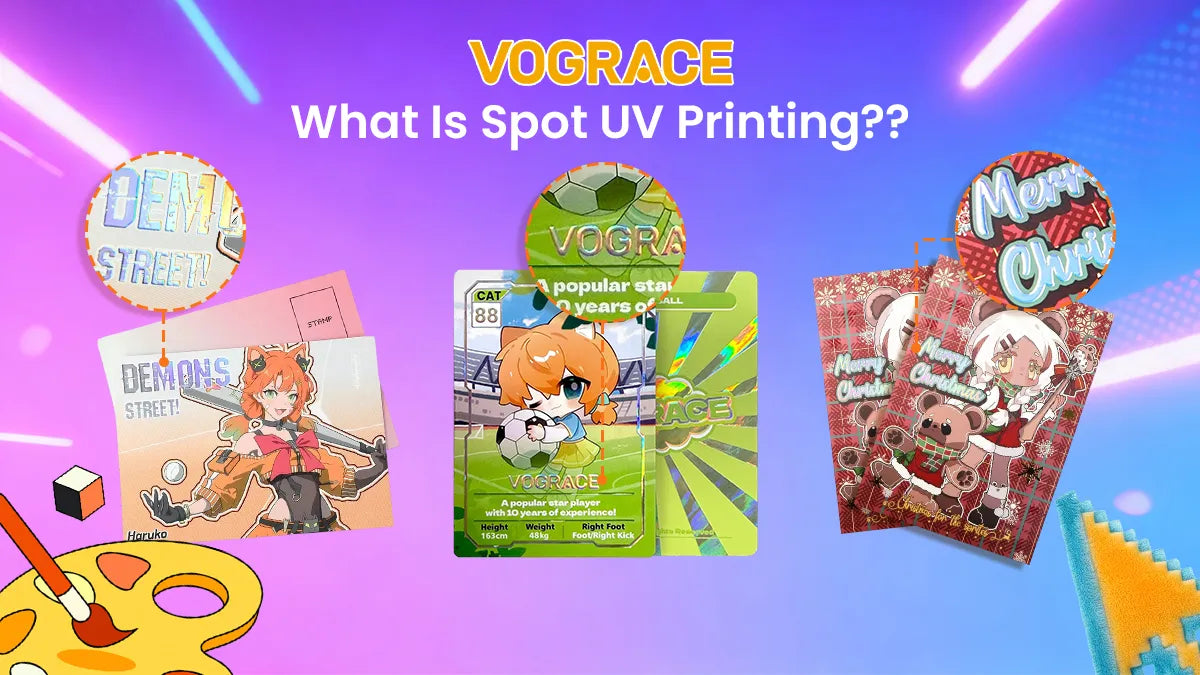
Take a trading card lying on your desk under a lamp, for example. At first glance, it looks plain and flat, but when you tilt it a bit, one small spot turns glossy and bright, like a drop of water on paper. That shine is spot UV. It is a simple finishing trick that makes a printed piece feel more special and professional.
In this guide, you'll learn what spot UV printing is, how the process works, where people use it, and why it helps. You'll also learn a few common mistakes to avoid.
What Is Spot UV Printing?
Spot UV printing is a clear, glossy coating that goes on chosen spots of a printed piece and is hardened with UV light, hence the name "spot UV printing." The word "spot" here means that only specific areas get the shine, while the rest of the page stays flat and calm.
Picture a single dot of clear gloss on a matte mug, for example. The mug normally looks soft and quiet, but that one spot shines. Spot UV works the same way on paper or card. The thin, durable coating sits on top of the design and catches the light, making the selected areas look glossy and stand out from the rest.
But there's one small detail worth knowing. Spot UV is not really printing, since no ink is added during the process. It is a layer put on after the ink is already down. Most people call it spot UV printing, and some call it spot gloss or spot varnish, but all three names point to the same finish.
How Spot UV Printing Works

Let's now look at how spot UV printing works in three steps. These steps cover the whole process, and none of them is hard to follow.
First, choose the spots. A black-and-white file marks exactly where the shine should go. The black shapes get the gloss, and the white areas stay untouched. These shapes must match the artwork closely, or the shine will land in the wrong spot and ruin the effect.
Second, lay the clear coat. The printer puts liquid varnish on those spots only. This works best over a matte or soft-touch surface, because a flat background makes the gloss stand out. Without that contrast, the shine can blend into the design and lose its effect. Our Foil & Spot UV Cards use this setup, with soft-touch film on the front and matte film on the back of each card.
Third, lock it in with UV light. The light hardens the coating almost at once, so there is no long wait for it to dry, and the sheet is ready for the next step in the process very quickly.
Some versions also stack the coating in layers, which gives the gloss a slightly raised feel under your finger. The result is a clear, hard finish that stays exactly where the printer put it.
Spot UV vs. Full UV Coating: Which Should You Choose?
Full UV coating, as the name suggests, covers the whole sheet from edge to edge, while spot UV covers only select areas.
A full coat adds shine and protection everywhere, but a spot coat adds focus, because it tells the eye where to look first.
If you want one bright logo on a calm page, pick spot UV. If you want the entire page to shine, a full coat is the better choice.
A lot of designers like spot UV because contrast does more work than shine alone.
Benefits of Spot UV Printing and Where It Is Used
Spot UV helps in a few clear ways, and most of them are easy to notice.
You see the difference. Shiny spots stand out against a flat background, and the eye naturally goes there first.
You feel the difference. The coating is smooth, so a card feels richer and heavier in your hand, especially next to a regular plain one.
It lasts longer. The hard layer helps guard the covered spots against scuffs and smudges from daily handling.
It is quick and relatively clean. UV coatings cure in moments and give off few harmful fumes while they harden.
Spot UV shows up on many kinds of printed items, and the best ones use gloss on one small detail while leaving the rest alone. Here are a few real-life examples where spot UV printing is regularly used:
Business Cards and Stationery
A logo, a name, or a small pattern gets the gloss. People feel that smooth spot as soon as they hold the card, and it often earns a second look. Invitations, folders, and notebook covers use the same idea to add a touch of polish.
Packaging, Books, and Brochures
A brand mark on a box gets a glossy touch that stands out on a shelf. A title on a book cover pops against a soft jacket, and a headline on a brochure draws the eye before any other words do. Cosmetic boxes and game boxes also use spot UV to look more expensive.
Trading Cards
Card makers gloss artwork details, character outlines, names, and rarity marks. A shiny title bar can make a plain design feel rare, and the shine also helps a special card stand out in a thick stack, which collectors really enjoy during trading and display.
Spot UV vs. Foil
People often mix up foil and spot UV, and the confusion is understandable because both add shine, but they do different jobs.
Foil is a metallic layer that brings color such as gold or silver, while spot UV is clear, so it adds gloss but no color. It only changes how light bounces off the surface.
These two finishes can also share a design. For example, foil can fill a title with bright color, while spot UV makes a nearby shape glossy, and that mix gives a card both color and depth. That's the concept behind our Duplexed Foil & Spot UV Cards, which carry both finishes on one card.
Common Mistakes to Avoid
Here are a few small slips that can spoil the effect of spot UV printing. Luckily, all of them are easy to prevent.
Using too much gloss: Many shiny spots make a design look cluttered, so pick one or two key spots and let the rest breathe.
Using tiny details: Thin lines and small text can blur together when the finish is applied, so keep them simple. For foil and thick UV, card makers usually ask for lines about 0.25 mm thick and gaps of about 0.4 mm, so check the exact limits with your printer before you finalize the file.
Missing the artwork: If a gloss shape sits off the design, the finished piece looks sloppy, so check your file carefully before you send it.
Picking thin paper: Very thin sheets are a poor fit for spot UV, so choose a sturdy stock instead.
Keep these simple tips in mind, and your next card will earn that bright flash under the lamp, along with a second look from everyone who holds it.
Final Thoughts
Spot UV printing is a simple way to make printed designs stand out. Choose the right areas for gloss, pair it with a suitable base, and give your cards, packaging, or stationery a more premium look.