Sustainable Merch: Eco-Friendly Materials for Small Batches
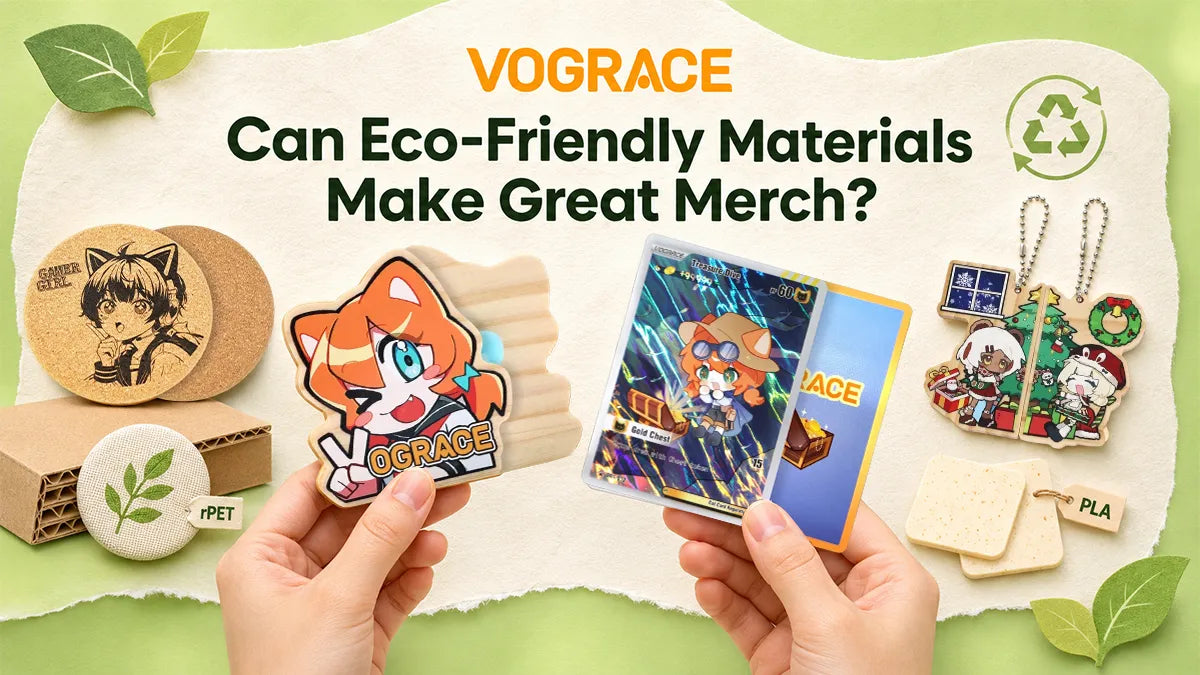
For independent illustrators, fan artists, and small creative brands, seeing an original design become a physical product is a milestone. A character turns into an acrylic keychain. A sketch becomes a sticker sheet. Suddenly, something that lived on a screen can be held, gifted, and sold.
But as your merch collection grows, another question comes up: Can you make those products with less environmental impact? It is worth asking not just what a product looks like, but what goes into making it, how it is packaged, and how much you really need to produce.
Sustainable merch isn't about swapping every material overnight. Recycled paper, responsibly sourced wood, certain recycled plastics, and recycled PET fabrics can all be worth exploring. What matters is whether they suit your design, meet your quality standards, and make sense for small-batch production. Here's how to assess the options without losing sight of your budget or your customers.
Which Eco-Friendly Materials Work for Custom Merch?
There's no single "green" material that works for every product. Printing methods, durability, appearance, and supplier capabilities all matter. Start with the product you're making, then consider which materials could work in practice.

Recycled Paper and Cardboard
Potential uses: Sticker paper, postcards, art prints, backing cards, packaging boxes, stationery, and thank-you cards.
Recycled paper and cardboard are among the more accessible ways to introduce alternative materials into a merch collection. They're made by processing recovered paper or cardboard and can be used for both printed products and packaging.
Think about an artist launching a first set of acrylic charms. The charms themselves might use conventional materials, but their backing cards could be made from recycled paper instead of plastic. It's a small change that doesn't require redesigning the main product.
Other practical applications include pin backing cards, illustration postcards, paper envelopes for sticker packs, product inserts, and recycled-cardboard mailer boxes.
Why consider it: Recycled paper is available in a range of formats, can carry printed artwork and branding, and may be workable for relatively small orders. In suitable applications, paper-based packaging can also replace some plastic components.
What to check: Recycled papers vary in shade, texture, and finish. Those differences can affect color accuracy and fine illustration details. Paper also usually needs additional treatment for water resistance, while laminates, coatings, and adhesives can make recycling more difficult. A paper product isn't automatically recyclable in every local system.
Recycled Plastic and Recycled Acrylic
Potential uses: Certain decorative plastic products, accessories, and potentially some acrylic-style charms, where compatible materials and production processes are available.
Acrylic keychains and standees are popular for a reason: they're lightweight and let colorful artwork stand out. Conventional acrylic generally relies on petrochemical feedstocks, so some artists are interested in recycled alternatives.
Recycled plastic is made using recovered plastic as an input. However, recycled plastic isn't one uniform material, and not every formulation can be cut, printed, or finished like standard acrylic. For intricate, transparent character charms, clarity and surface quality may be especially important. A material with a more textured or muted appearance, on the other hand, might complement a vintage or earthy illustration style.
Before committing, ask your supplier about:
· Transparency, color consistency, and surface imperfections.
· Scratch resistance, thickness, and structural strength.
· Compatibility with cutting, printing, and finishing processes.
· Stable availability, material origin, and verified recycled content.
Keep the terms separate: Recycled, recyclable, and biodegradable mean different things. Using recycled content doesn't guarantee that the finished product can be recycled again, especially if it contains mixed components or specialized finishes.
Wood and Bamboo
Potential uses: Wooden keychains, engraved charms, decorative ornaments, pins, and selected stationery items.
Wooden keychains have a look that acrylic can't quite replicate. Its grain and warmer finish can suit botanical artwork, fantasy characters, rustic branding, or minimalist illustrations. Depending on the product and process, wood may also support laser engraving or printing.
Bamboo can regenerate relatively quickly when grown and managed responsibly, but that alone doesn't make every bamboo product a better environmental choice. The source of the raw material, processing methods, coatings, and adhesives still matter.
Why consider it: Distinctive natural textures, an alternative visual style, and potential compatibility with engraving or certain printing methods.
What to check: Wood grain and color can vary between pieces or batches, which may affect artwork reproduction. Confirm where the material comes from, whether any sustainability claims are documented, and how surface treatments affect the finished item.
Recycled PET (rPET)
Potential uses: Some fabric pouches, reusable shopping bags, textile accessories, and packaging materials.
Recycled PET, or rPET, is made from recovered PET plastic, which may include used bottles. It can be processed for certain textiles and packaging applications.
For an artist building a collection around their illustrations, a printed storage pouch or custom tote bag could add a practical product alongside pins and keychains. If you're considering rPET, confirm the fabric composition and availability with the supplier rather than assuming every reusable bag contains recycled material.
Why consider it: rPET can give recovered PET another use and expand the range of functional textile merch.
What to check: Not all decorative plastic items can be made from rPET. Textile production and finishing still require resources, blended fibers can complicate recycling, and the actual recycled-content percentage needs to be confirmed rather than assumed.
How to Match Materials to Different Merch Products
The best material depends on the product, its intended use, and the quality you need. This table is a starting point for discussions with a manufacturer, not a list of materials that every supplier necessarily offers.
|
Product |
Material to explore |
Main considerations |
|
Stickers |
Recycled paper |
Surface finish, print quality, adhesive |
|
Postcards |
Recycled paper |
Paper weight, color accuracy |
|
Art prints |
Recycled paper |
Texture, color, fine details |
|
Acrylic charms |
Compatible recycled acrylic |
Clarity, durability, processing compatibility |
|
Wooden charms |
Responsibly sourced wood or bamboo |
Grain, engraving, coatings |
|
Pin backing cards |
Recycled paper or cardboard |
Print quality, rigidity |
|
Merch packaging |
Recycled cardboard or paper packaging |
Protection, ease of recycling |
|
Tote bags |
rPET fabric or responsibly sourced natural fibers |
Fiber content, durability, printing method |
Before ordering, confirm availability, specifications, minimum order quantity (MOQ), printing requirements, and quality standards with the supplier. A promising material is only useful if it can actually be produced in the quantity and format your design needs.
Is Sustainable Merch Practical for Small Orders?
Independent creators often work with smaller budgets and less predictable demand than established brands. A material that makes sense for a large production run may not be practical for 20, 50, or 100 pieces. Four considerations can help you decide.
1. Material Costs May Be Higher
Some recycled or specialty materials cost more than conventional options. Limited supply, additional sorting and processing, specialized equipment, fewer suppliers, and minimum purchasing quantities can all contribute.
With a large production run, those costs are spread over more units. With a small batch, the difference can be harder to absorb. That's why a targeted upgrade—such as a recycled-paper backing card or simpler paper packaging—may be a better starting point than changing every component at once.
2. Minimum Order Quantities and Supply Can Be Limiting
A manufacturer may be able to source a recycled material only above a certain order size. Even when the underlying production technology is mature, the supplier might not support a run of just a few dozen pieces.
Small-batch custom manufacturing offers flexibility, but low MOQs do not automatically apply to every specialty material. Ask about material-specific minimums and lead times before designing your collection around a particular option.
3. Quality and Durability Still Come First
A merch product needs to work as a product. If an alternative material scratches easily, reproduces colors poorly, or breaks sooner than expected, replacements and reprints can add cost and material use.
Request samples when possible. Check color reproduction, print sharpness, scratch resistance, required water resistance, structural strength, and how the item performs during normal use. A thoughtful material choice should support the customer experience, not undermine it.
4. Packaging and Shipping Matter Too
A product made with alternative materials still needs to reach customers intact. Replacing protective plastic with paper may reduce one type of packaging, but if the new package doesn't protect a fragile charm or pin, damage and replacement shipments create other costs and impacts.
The goal isn't to remove every layer of protection. It's to use the right amount of appropriate packaging for the item and its journey, balancing material use, shipping conditions, product safety, and overall cost.
Why Small-Batch Production Can Help
A common challenge for independent artists isn't a lack of ideas; it's not knowing which ones customers will buy. Producing hundreds of units before testing demand can leave you with unsold stock.
Small-batch ordering gives you room to learn. It isn't inherently waste-free or always more resource-efficient per unit—set-up and equipment preparation may make small runs less efficient—but it can help you avoid committing to a large amount of untested inventory.
Produce Around Real Demand
Start with a manageable quantity, assess customer response, and restock when the numbers justify it. Preorders can also help clarify demand before you commit to a larger run. This approach gives creators more flexibility when launching a new character, collection, or product type.
Compare Materials Before Scaling Up
You can test the same design on standard and recycled paper to compare print results. You might also compare a wooden charm with an acrylic one, try different protective packaging, or sample pouch fabrics to see what customers respond to.
Samples make the trade-offs easier to judge: does the color still look right, does the finish suit the artwork, and is the cost acceptable? If the test goes well, you can consider increasing quantities.
Let the Material Shape the Collection
Material choices can become part of the creative direction rather than an afterthought. Imagine a woodland-themed merch drop: wooden character charms, art prints on recycled paper, sticker sets with paper-based packaging, and a reusable illustrated pouch.
The point isn't that every item automatically becomes sustainable. It's that thoughtful product design can bring visual style, practical use, and material decisions into the same conversation.
Work With a Manufacturer Who Can Explain the Options
Your supplier's capabilities are just as important as the material itself. Look for clear information on available substrates, production requirements, quality control, and custom-order flexibility.
At Vograce, we work with independent creators and small art brands to turn original designs into custom merch. If you're exploring alternative materials or packaging, raise those questions early in product planning. Ask what is actually available for your chosen product instead of assuming every eco-focused material can be offered for every design or order size.
How to Start Making More Sustainable Merch: Five Steps
You don't need to replace an entire collection to get started. A few well-chosen experiments can be more practical—and more informative—than a complete overhaul.
Step 1: Audit the Materials You're Already Using
List the main components in each product. For example:
· Acrylic keychains: acrylic body, metal hardware, protective packaging.
· Pins: metal components, printed paper, packaging.
· Stickers: paper or plastic film, adhesive, release liner.
· Art prints: paper, ink, protective packaging.
· Fabric merch: fabric, printing materials, sewing accessories.
Once you know what goes into each item, it's easier to identify where a substitution would make sense and where durability or production requirements should take priority.
Step 2: Start With Changes That Are Easier to Make
Packaging can be a practical first place to look, because improvements there may not require changing the product itself. Depending on what's available and appropriate, you could try recycled-paper backing cards, recycled-cardboard boxes, less decorative wrapping, better-fitting packaging, or reusable packaging for suitable items.
None of these choices is universally better in every situation. Consider protection, material sourcing, and how customers can dispose of or reuse the packaging.
Step 3: Get Samples and Compare Them
For recycled-paper art prints, check the paper weight, surface texture, detail reproduction, and colors side by side with your usual stock. For wooden charms, examine how the grain interacts with your art and how well engraving or printing turns out.
Testing early is usually less expensive than discovering a mismatch after you have placed a production order.
Step 4: Calculate the Full Cost, Not Just the Material Price
Look at the whole process: material sourcing, production and setup, printing and finishing, packaging, shipping, and the potential cost of damage or reorders.
For example, recycled-cardboard packaging might cost a little more per unit but eliminate the need for an extra decorative component. Whether that improves your overall cost depends on the actual design and order details. Compare complete quotes, not just price tags on materials.
Step 5: Be Specific With Your Customers
If you've made a documented material change, explain it clearly on the product page, a packaging card, or social media. Examples of appropriately specific wording might be:
· "The backing card contains 70% recycled paper." (Only if verified.)
· "This collection uses recycled cardboard packaging." (Only if verified.)
· "The wood for this charm comes from a documented responsibly managed source." (Only if verified.)
Claims should match supplier documentation and the finished product's actual specifications. Clear, narrow statements are more trustworthy than broad labels such as "100% eco-friendly," which can be difficult to substantiate.
What's Next for Sustainable Artist Merch?
Better materials are one part of the picture. Product design, inventory decisions, packaging, and what happens after an item is used can matter just as much.
More Material Choices for Small Runs
As processing technology and supply chains develop, recycled plastics, alternative textiles, and responsibly sourced papers may become available in more formats. For independent artists, the key question is whether these options will be accessible at realistic prices and minimum order quantities—not simply whether they exist.
Greater Interest in Demand-Led Production
Preorders, on-demand models, and smaller test runs give creators ways to gauge interest before scaling up. None completely eliminates production waste, but each can reduce the risk of making a large quantity of products that customers haven't asked for.
Sustainability as Part of a Creator's Identity
Material sourcing, packaging choices, product longevity, and straightforward communication can all become part of how a creative brand works. You don't have to label your entire shop a sustainable brand. It can start with one product, one backing card, or one better-informed production decision.
Final Thoughts: Start Small, Make It Count
Sustainable merch doesn't have to mean giving up acrylic charms, pin collections, or the styles your audience loves. It means taking a closer look at the choices behind them—what materials are used, what production methods are practical, and how many items you really need.
There are real limitations. Availability, MOQs, cost, quality, durability, and local recycling infrastructure all affect whether a particular option makes sense. That's why there isn't one perfect material or a universal answer for every creator.
Start with one product. Compare one alternative material. Simplify one piece of packaging. Then use the results and customer feedback to decide what comes next.
At Vograce, we want creators to have room to develop their ideas, from a first batch of custom keychains to an entirely new pin collection. If you're planning your next merch launch, talk through materials, production options, budget, and intended use before placing your order.
Have questions about small-batch customization, material choices, production costs, or selling artist merch? Share them in the comments or reach out by email at wangying@baigedi.cn. We'd love to hear what you're making.